
Vamos encarar os fatos: gerenciar os perfis de empresas do Google (GBPs) pode ser incrivelmente frustrante quando eles simplesmente não são classificados no pacote local - independentemente dos ajustes que você tente. Uma auditoria de SEO local é uma arma secreta para descobrir exatamente o que está atrapalhando e criar uma lista clara dos próximos passos para melhorar a visibilidade.
Este guia analisa toda a presença local do seu cliente, desde o perfil do Google Business até a otimização do site, citações e avaliações, fornecendo uma visão clara do que está funcionando e do que precisa de atenção imediata. Também incluí uma lista de ferramentas de auditoria recomendadas e instruções diretas sobre como interpretar os resultados, preparando-o para o sucesso.
Por que realizar uma auditoria de SEO local?
Razão 1: para melhorar as classificações de pesquisa local
Você já se perguntou por que algumas empresas aparecem consistentemente no pacote 3 local do Google, enquanto outras lutam para chegar à primeira página? Uma auditoria completa de SEO local ajuda a impulsionar as classificações locais do seu cliente, identificando as lacunas de otimização específicas que o estão impedindo.
Já vi empresas transformarem completamente sua visibilidade local em questão de semanas depois de abordar as constatações da auditoria que haviam negligenciado durante meses. A diferença entre aparecer no cobiçado pacote 3 local do Google e ficar escondido na segunda página pode representar milhares de dólares em receita para seu cliente.
Razão 2: aumentar o tráfego orgânico e de pedestres
Há uma linha direta entre uma melhor visibilidade na pesquisa local e resultados comerciais reais - visitas ao site, ligações telefônicas e tráfego de pessoas prontas para comprar. Em vez de fazer melhorias aleatórias e esperar que algo se concretize, uma auditoria ajuda você a se concentrar nas mudanças que levarão os clientes até a porta do seu cliente.
Terceiro motivo: para ficar à frente dos concorrentes
No SEO local - ou no SEO em geral -, o que funcionou no ano passado pode não funcionar hoje. Analisar os concorrentes locais é um elemento crucial de sua auditoria de SEO local. Uma análise completa fornece informações valiosas sobre as estratégias dos concorrentes e revela oportunidades em que você pode obter uma vantagem.
Descobri que muitas empresas locais não sabem quando os concorrentes melhoram significativamente sua presença local até perceberem uma queda nas chamadas ou no tráfego. Verificações regulares garantem que você esteja otimizando de forma proativa, em vez de tentar recuperar o atraso de forma reativa.
4ª razão: para obter a adesão dos clientes
Para agências e especialistas que atendem clientes em áreas geográficas específicas, as auditorias regulares de SEO local não são apenas úteis, são essenciais! As pessoas recorrem ao Google com mais frequência para obter ajuda nas decisões de compra de produtos, e os riscos para a visibilidade da pesquisa local nunca foram tão altos. Uma auditoria ajuda a identificar por que determinados clientes podem estar perdendo terreno para os concorrentes e informa o que deve ser feito para ajudá-los a dominar a pesquisa local quando os clientes em potencial estiverem procurando ativamente por seus serviços.


Cinco elementos-chave de uma auditoria de SEO local
1. Análise do perfil comercial do Google
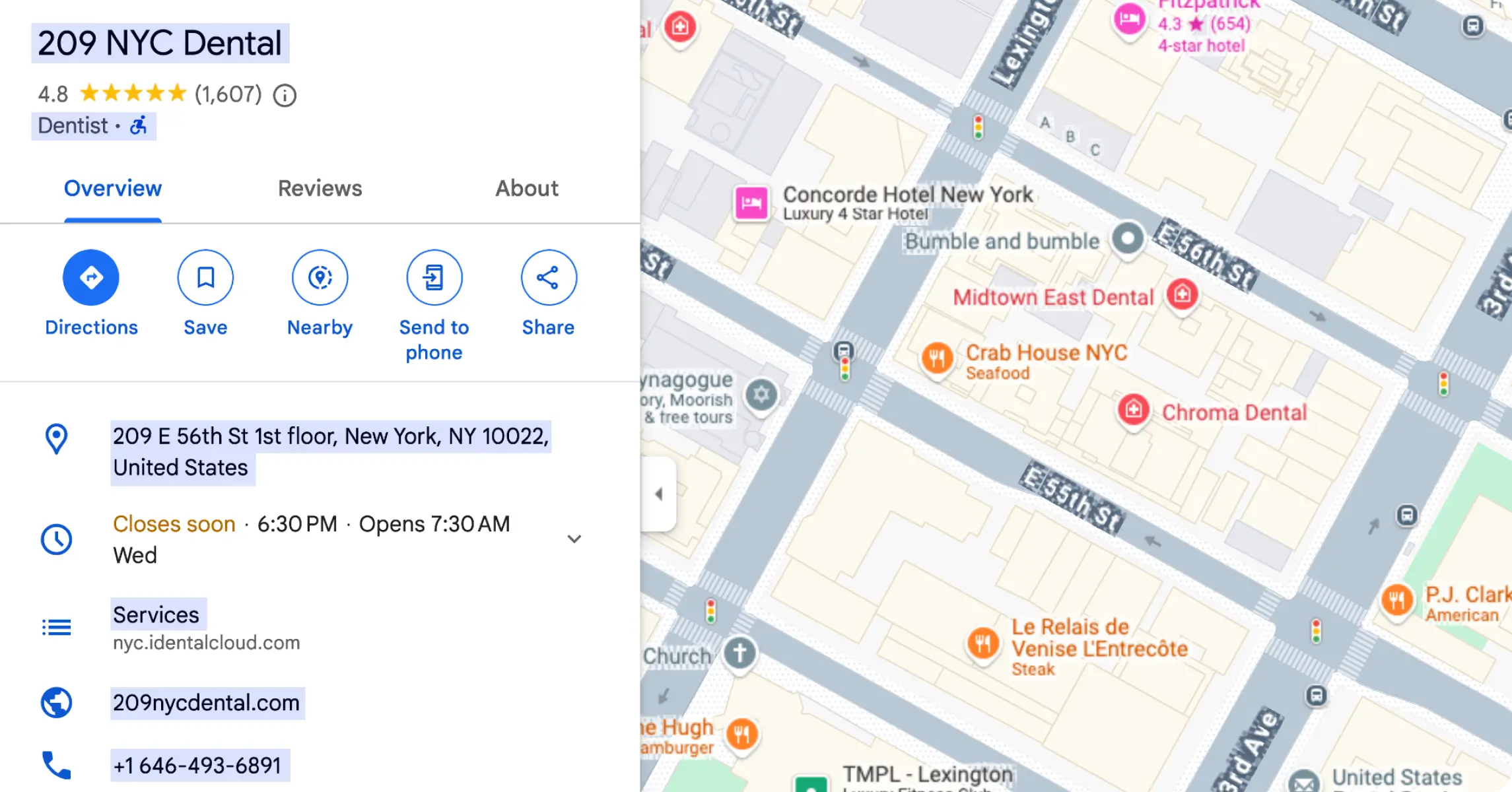
Um perfil comercial do Google é a base da visibilidade local. Portanto, uma auditoria de SEO local adequada deve examinar a listagem do GBP da empresa do seu cliente, especialmente a consistência do NAP (nome, endereço e telefone) e a integridade do perfil. Uma parte crucial é verificar a integridade e a precisão das informações da empresa. Verifique tudo, desde a seleção da categoria (principal e secundária) até fotos, serviços, produtos, conteúdo de perguntas e respostas e publicações.
As empresas saltaram da terceira página para o pacote local simplesmente corrigindo erros de categoria e completando seções de perfil anteriormente negligenciadas. Não subestime o poder de um GBP totalmente otimizado - ele geralmente proporciona o maior retorno (mais vendas e receita) de seus esforços de otimização.
2. Verificação do site
Mesmo o perfil comercial do Google mais bem otimizado precisa do suporte de um site específico do local. Sua auditoria deve verificar a eficácia com que o site comunica a relevância local por meio de páginas de serviços específicas do local ou páginas específicas de serviços e conteúdo de blog que abordem as necessidades e os problemas locais.
Muitas empresas cometem o erro de criar conteúdo genérico que não sinaliza a experiência local para usuários e mecanismos de pesquisa. A adição de conteúdo com foco local pode aumentar significativamente os sinais de relevância de seu cliente.
3. Auditoria de citações locais
As inconsistências de citações continuam sendo um dos problemas mais comuns, porém corrigíveis, que identifico durante as auditorias de pesquisa local. A otimização das listagens de empresas em plataformas como Google e Apple é crucial para aumentar a visibilidade nos mecanismos de busca. Essa parte da auditoria verifica se os detalhes da empresa do seu cliente aparecem de forma consistente em diretórios, sites de avaliação e plataformas sociais.
O Google tornou-se mais inteligente ao lidar com pequenas variações, portanto, pequenas diferenças como “Street” versus “St.” nem sempre prejudicam diretamente as classificações. No entanto, discrepâncias maiores (por exemplo, números de telefone ou endereços diferentes em vários diretórios) podem levar a problemas de confiança e autoridade reduzida nas pesquisas locais. As empresas ganham várias posições no ranking simplesmente limpando as inconsistências de citação nas principais plataformas.
4. Avaliação de avaliações on-line
Quando foi a última vez que você analisou minuciosamente o perfil de avaliações do seu cliente no Google e em plataformas específicas do setor? As avaliações on-line têm se tornado cada vez mais importantes tanto para a classificação quanto para a conversão - elas estabelecem confiança e levam os visitantes a um site. Sua auditoria deve examinar a quantidade, a qualidade, a recência e os padrões de resposta das avaliações.
Perguntas que você pode fazer a si mesmo durante a auditoria de avaliações:
- Há tendências de sentimentos negativos que precisam ser abordadas?
- Seu cliente se envolve com os clientes e responde às avaliações prontamente?
- Como são as respostas; ele monitora o feedback e se compromete a resolver as preocupações?
- Eles solicitam feedback detalhado após a compra?
Um perfil de avaliação fraco pode prejudicar até mesmo os melhores esforços de otimização, ao passo que gerenciar as expectativas e abordar o feedback negativo são cruciais para manter uma boa reputação.
5. Análise da concorrência
Frequentemente, descubro que as empresas que têm dificuldades com a visibilidade local não analisam regularmente o que os concorrentes mais bem classificados estão fazendo de certo. Examine mais de perto os mesmos elementos em sua auditoria, concentrando-se especificamente nos perfis de negócios do Google, sites, perfis de citação e estratégias de avaliação dos concorrentes de seu cliente. Essa análise abrangente geralmente revela oportunidades relativamente simples de diferenciar uma empresa e solucionar lacunas.
Mas ei! Uma palavra de cautela: O objetivo dessa análise não é copiar os concorrentes, mas entender o nível básico de otimização que você precisa para competir.
Vamos nos aprofundar na auditoria de SEO local em si.
Guia passo a passo para uma auditoria de SEO local
1. Aprofunde-se no perfil comercial de seu cliente
Primeiro, comece examinando o básico no perfil comercial do Google:
- Nome da empresa : Ele é consistente em todas as listagens? (É do interesse de seu cliente evitar o excesso de palavras-chave no campo do nome - o Google não é fã dessa tática e o penalizará por isso!)
- Categoria primária : Foi selecionada a categoria mais específica que descreve exatamente o negócio? Essa escolha tem um impacto enorme sobre as pesquisas em que seu cliente aparece.
- Categorias secundárias : Existem todas as categorias secundárias relevantes para obter visibilidade adicional na pesquisa? Muitas empresas não fazem isso.
- Endereço : O formato do endereço está de acordo com os padrões da USPS? Para empresas de área de serviço, a área de serviço foi definida corretamente?
- Número de telefone : O telefone principal da empresa é atendido durante o horário comercial?
- URL do site : Esse link direciona para a página inicial do seu cliente para empresas com um único local ou para páginas de locais específicos para empresas com vários locais?
Captura de tela de um painel do GBP devidamente otimizado no Google Business Manager com os principais elementos identificados](/pt-br/assets/img/blog/posts/complete-local-seo-audit-guide/image-2.webp)
Em seguida, observe os elementos visuais - eles são mais importantes do que a maioria das pessoas imagina:
- Foto da capa : Ela é de alta qualidade, tirada com profissionalismo e realmente representativa da empresa?
- Logotipo : Ele está lá? É um logotipo de alta resolução e formatado corretamente?
- Fotos adicionais : Há imagens diversas e de alta qualidade mostrando produtos, serviços, membros da equipe e instalações?
- Vídeos : Eles têm vídeos breves destacando os serviços ou depoimentos de clientes?
Essas seções de conteúdo são frequentemente negligenciadas, mas podem fazer uma diferença real:
- Descrição do negócio : Ela inclui naturalmente palavras-chave relevantes e descreve claramente os serviços e os pontos de venda exclusivos em menos de 750 caracteres?
- Produtos e serviços : Há uma lista completa com descrições de produtos e serviços com preços?
- Atributos : Eles selecionaram todos os atributos relevantes, como comodidades e opções de acessibilidade, que destacam o que torna a empresa especial?
- Seção de perguntas e respostas : Eles adicionaram e responderam proativamente a perguntas comuns?
- Posts : Seu cliente está publicando regularmente atualizações, ofertas e eventos para manter o perfil atualizado?
Por fim, dê uma boa olhada em como eles estão interagindo com os clientes:
Mensagens : As mensagens estão ativadas e monitoradas?
- Recursos de agendamento : Se aplicável, eles configuraram o agendamento de compromissos?
Escolher as categorias certas e preencher todos os campos do perfil corretamente é uma etapa fundamental para a visibilidade.
2. Faça uma pesquisa de palavras-chave locais para verificar a relevância
Agora, faça uma pesquisa completa de palavras-chave locais para identificar termos relevantes que os clientes do seu cliente usam. (Já vi muitos proprietários otimizarem para termos que eles PENSAM que os clientes usam em vez de pesquisarem termos de pesquisa REAIS…)
Considere tanto os termos gerais de alto volume (como “dentista”) quanto as consultas mais longas e específicas com modificadores locais (como “dentista de emergência no centro de Chicago”). Concentre sua pesquisa nestas três áreas principais:
Palavras-chave baseadas em serviços (por exemplo, “encanador de emergência”)
- Modificadores baseados em localização (por exemplo, “encanador em Austin”)
- Termos específicos do bairro ou distrito (por exemplo, “encanador do centro de Austin”)
Faça pesquisas de palavras-chave locais regularmente à medida que o comportamento de pesquisa do usuário, as tendências e os dados evoluem. Por exemplo, a Ahrefs atualiza seus dados de volume de palavras-chave e custo por clique pelo menos uma vez por mês, portanto, manter-se informado é do seu interesse e do interesse do seu cliente. Isso lhe dá motivos para aconselhar a mudança de foco em um roteiro e adicionar novas palavras-chave à lista de prioridades.
3. Veja se o SEO na página envia os sinais corretos
Agora, a avaliação de SEO na página é uma parte crucial de uma auditoria local. Verifique até que ponto o site sinaliza a relevância local para os usuários e para os mecanismos de busca. As páginas de destino específicas do local geralmente fornecem os sinais de relevância mais fortes.
- Estrutura do URL : As páginas de localização estão usando URLs otimizados?
(Empresas com vários locais devem manter uma estrutura de URL clara e baseada no local, como esta, www. example.com/ services /new-york/manhattan, www.example.com/ services /new-york/brooklyn ou esta www.example.com/ locations /new-york/manhattan, www.example.com/ locations /new-york/brooklyn.)
- Title tags e meta descriptions : Eles têm as principais palavras-chave de serviço e localização?
- Cabeçalhos (H1, H2, H3) : Eles oferecem relevância local?
- Qualidade do conteúdo : Ele atende às necessidades dos clientes locais e demonstra a experiência local de seu cliente?
(Pense no que a comunidade local do seu cliente está realmente procurando. Você deve se certificar de que o conteúdo esteja alinhado com a intenção deles e que também seja adequado à empresa. O Google prioriza empresas que demonstram conhecimento local e credibilidade por meio de conteúdo de alta qualidade, envolvimento do cliente e fortes sinais de reputação).
- Link interno : Há uma estrutura lógica conectando as páginas?
- Experiência do usuário : O site é fácil de usar e incentiva a ação por meio de botões de CTA fortes, descrições convincentes e conteúdo interativo?
4. Passe para a auditoria técnica de SEO
Mesmo um conteúdo perfeitamente otimizado não será classificado se problemas técnicos estiverem impedindo o site. Com a maior ênfase do Google nos sinais de experiência da página, a otimização técnica se tornou ainda mais crucial para o sucesso da pesquisa local. Sua auditoria técnica deve incluir:
- Capacidade de resposta para dispositivos móveis : O site oferece uma boa experiência de usuário em smartphones? Os botões são clicáveis? As imagens têm os tamanhos corretos? O design é acessível a usuários com necessidades diferentes?
- Velocidade da página : As páginas são carregadas em menos de 5 segundos na Web e em dispositivos móveis?
(As páginas que carregam rapidamente melhoram a experiência do usuário e as conversões, e o Google considera a capacidade de resposta móvel, a usabilidade e a segurança ao classificar os sites).
- Marcação de esquema : O esquema de empresas locais está implementado para ajudar o Google a recuperar informações comerciais instantaneamente?
(Há quatro marcações de esquema local que vale a pena usar: LocalBusiness, Organization, Address e Review).
- Indexação : As páginas importantes estão indexadas e disponíveis para os pesquisadores?
- Segurança HTTPS : O site inteiro é seguro para manter os dados dos visitantes protegidos?
- Erros de status : Há links quebrados ou erros 404 que enviam os visitantes para páginas incorretas ou ausentes?
5. Analise o perfil de backlinks e as menções sem link do seu cliente
A relevância local no perfil de backlinks de seu cliente pode afetar drasticamente a capacidade de classificação em sua área de serviço e melhorar as classificações.
Sua análise deve considerar a quantidade e, o mais importante, a qualidade dos links externos que apontam para o site do seu cliente, com atenção especial aos links relevantes localmente. Em nossa experiência, alguns links locais de alta qualidade geralmente superam dezenas de links genéricos de sites não relacionados.
Concentre sua análise de links em:
- Associações comerciais locais e câmaras de comércio
- Patrocínios e eventos comunitários
- Veículos de notícias e publicações locais
- Diretórios locais específicos do setor
- Empresas vizinhas (não concorrentes)
Use também os perfis de backlinks dos concorrentes de seu cliente na auditoria. Eles podem ajudá-lo a descobrir possíveis oportunidades que seu cliente pode ter ignorado.
Lembre-se: Não conte apenas os links - veja se eles enviam sinais relevantes sobre a autoridade e o conhecimento local de seu cliente. Isso também vale para menções de marca sem links para o site de seu cliente. As menções de marca sem links podem ajudar no reconhecimento da marca e podem contribuir para que o Google entenda uma empresa.
Você pode encontrar essas menções com um simples operador de pesquisa do Google, como allintext:, que pesquisará páginas com várias palavras em seu conteúdo. Por exemplo, se eu quisesse procurar menções sobre a Localo, tentaria allintext:localo seo tool .
6. Verifique se as citações locais são consistentes
A consistência das citações continua sendo fundamental para o sucesso da busca local. Sua auditoria precisa verificar se as informações de nome, endereço, número de telefone e site (NAP+W) da empresa do seu cliente aparecem de forma consistente em todas as plataformas on-line.
O gerenciamento de listagens de empresas é crucial para melhorar a visibilidade nos resultados de pesquisa local. Recomendo começar com os agregadores de dados primários que alimentam informações para outros sites e, em seguida, examinar os principais diretórios específicos do setor.
Lista de categorias das fontes de citação mais valiosas que são mais importantes para as empresas locais com base na prioridade](/pt-br/assets/img/blog/posts/complete-local-seo-audit-guide/image-3.webp)
Preste atenção especial a:
- Agregadores de dados primários (Data Axle, Neustar Localeze, Foursquare)
- Principais plataformas de avaliação (Google, Yelp, TripAdvisor)
- Diretórios específicos do setor
- Perfis de mídia social (Facebook, LinkedIn)
- Diretórios de empresas locais (Diretório de empresas da Câmara de Comércio da Grande Nova York)
7. Conclua com a análise de resenhas
As avaliações funcionam como sinais de classificação para o Google e sinais de confiança para clientes em potencial. Sua auditoria deve incluir:
- Classificação geral : Como a classificação média do seu cliente se compara à dos concorrentes?
- Velocidade das avaliações : Ele está recebendo novas avaliações de forma consistente?
- Resposta às avaliações : Eles respondem prontamente e com profissionalismo a todas as avaliações?
- Padrões de sentimento : Há temas recorrentes nos comentários positivos e negativos?
- Distribuição por plataforma : Eles estão coletando avaliações em várias plataformas relevantes?
Localo como uma solução abrangente para uma auditoria de SEO local
Como alguém que já realizou centenas de auditorias de SEO local, posso lhe dizer que ter as ferramentas certas faz toda a diferença. A Localo oferece recursos projetados especificamente para profissionais de SEO local por especialistas em SEO local, facilitando significativamente o monitoramento e a otimização dos Perfis de Empresas do Google, o rastreamento de classificações locais em vários locais e a identificação de oportunidades críticas de melhoria.
Uma ferramenta de auditoria de SEO local pode avaliar vários aspectos da presença na pesquisa local, incluindo listagens, otimização de palavras-chave e reputação on-line, fornecendo uma lista completa de insights sobre o desempenho de SEO local do seu cliente.
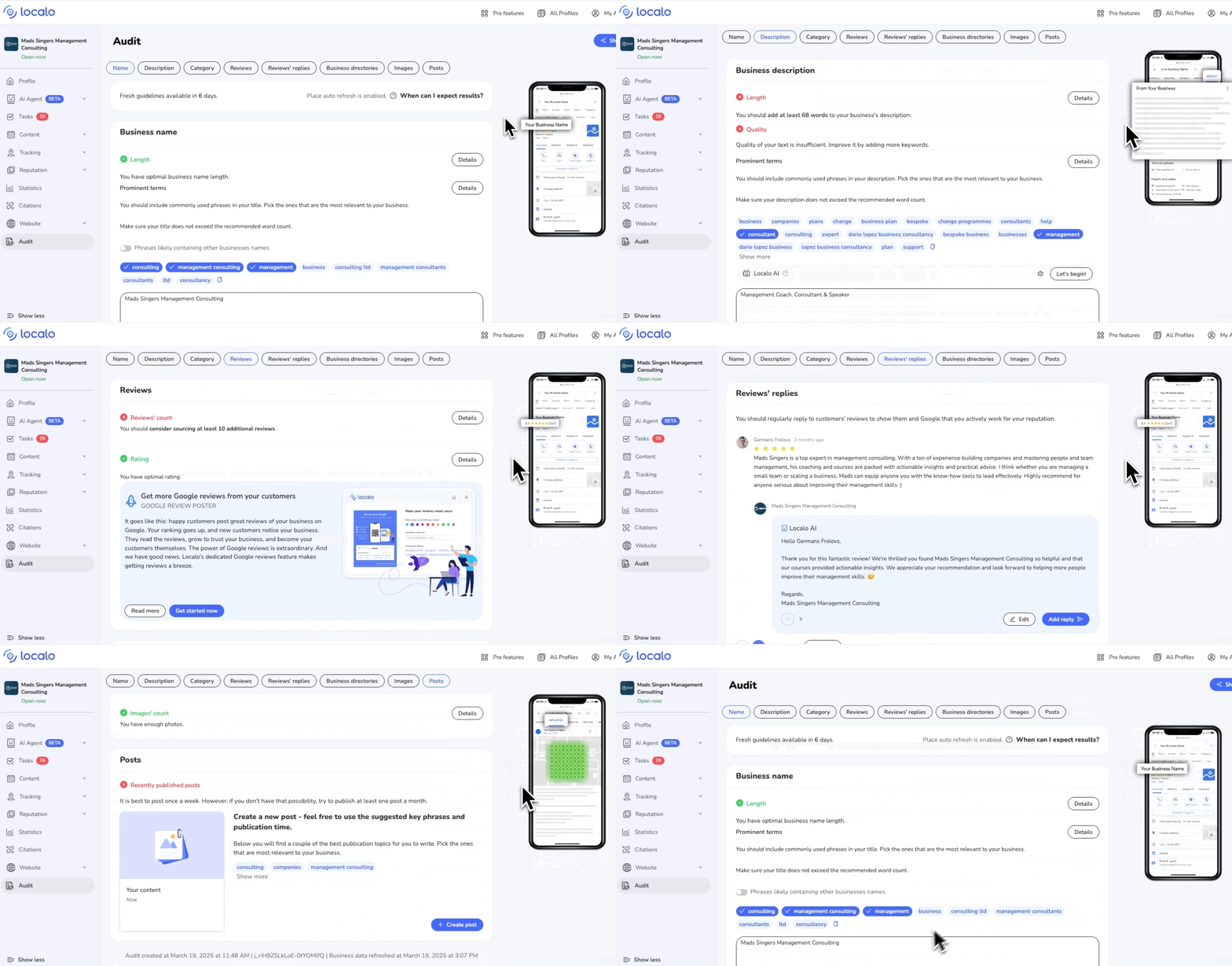
Veja os principais recursos que o processo de auditoria da Localo inclui:
- Auditoria de GBP com recomendações de otimização acionáveis
- Local rank tracking que mostra o desempenho em vários locais
- Citation tracking com recomendações para os diretórios mais relevantes localmente
- Review monitoring que ajuda a identificar padrões de sentimento
- Análise da concorrência que revela oportunidades estratégicas
90% da auditoria não é feita para você? O que eu mais gosto nessa ferramenta é como ela coloca o SEO local no piloto automático, economizando horas de trabalho manual. Para agências que gerenciam vários locais, o Localo transforma dias de trabalho de auditoria manual em um fluxo de trabalho automatizado que pode ser concluído em horas!
Ferramentas complementares
Embora o Localo ofereça uma funcionalidade especializada de SEO local, recomendo complementá-lo com ferramentas analíticas mais amplas para obter uma visão completa. O Google Analytics mostra como os usuários interagem com o site do seu cliente depois de encontrá-lo em pesquisas locais, enquanto o Google Search Console informa quais consultas geram mais impressões e cliques. Ferramentas como o Screaming Frog podem identificar problemas técnicos que podem prejudicar todos os seus esforços de otimização.
O processo de auditoria mais eficiente combina:
- Localo (para fatores específicos locais)
- Google Analytics (para análise do comportamento do usuário)
- Google Search Console (para dados de desempenho de pesquisa)
- Google Trends e Keyword Planner (para inspiração adicional de palavras-chave relacionadas a pesquisas locais e seus volumes de pesquisa)
- PageSpeed Insights (para desempenho técnico do site)
- Ahrefs ou Moz (para análise de backlinks)
- Screaming Frog (para auditoria técnica de SEO)
Essa combinação lhe dará profundidade em fatores específicos locais e amplitude em toda a experiência de pesquisa.
Interpretando os resultados da auditoria e tomando medidas
Priorização de descobertas
Depois de concluir a auditoria, você provavelmente terá uma longa lista de possíveis melhorias para o seu cliente. A chave para obter a adesão e a implementação efetiva é a priorização adequada.
Sempre categorizo as descobertas com base no impacto versus a dificuldade de implementação. Essa abordagem me ajuda a identificar os “frutos mais fáceis de colher” - mudanças de alto impacto que podem ser feitas com o mínimo de esforço.
Uma das melhores matrizes de priorização foi criada por Aleyda Solis, portanto pegue um link para os modelos gratuitos do Google Sheets e Slides. Elas o ajudarão a comunicar melhor a importância das mudanças aos seus clientes.
Em nossa experiência, esses problemas geralmente merecem prioridade máxima
- Problemas críticos de GBP (categorias incorretas, informações ausentes)
- Principais inconsistências de citação em plataformas primárias
- Padrões de avaliação negativa que exigem atenção imediata
- Problemas técnicos que afetam a experiência móvel
- Marcação de esquema ausente ou incorreta
Na verdade, o Localo pode não apenas ajudá-lo na auditoria, mas também sugerir **tarefas inteligentes semanais* priorizadas, ajudando-o a promover essa mudança por meio de um fluxo de trabalho baseado em ações. Interessado?Conecte seu GBP e experimente o Localo você mesmo.*
Desenvolvendo um plano de ação
A diferença entre uma auditoria que gera resultados e uma que acumula poeira geralmente se resume à qualidade do plano de ação. Recomendo a criação de um cronograma detalhado com tarefas específicas, pessoas responsáveis da equipe e prazos. Dividir grandes projetos de otimização em etapas factíveis não lhe dará muita dor de cabeça.
A matriz de Aleyda, que compartilhei acima, o ajudará a fazer exatamente isso.
Implementação de mudanças
Quando seu cliente lhe der o sinal verde para implementar os resultados da auditoria, não faça tudo de uma vez. Descobri que uma abordagem sistemática permite que você acompanhe melhor quais alterações têm o maior impacto e cria pontos de verificação naturais para informar o progresso aos clientes. Além disso, você não estará sobrecarregando o Google com muitas alterações simultâneas.
Documente suas métricas de linha de base antes de fazer alterações e, em seguida, implemente melhorias por categoria (GBP, citações, na página etc.), dando tempo suficiente para observar os resultados.
Monitoramento contínuo e auditorias regulares
Um dos maiores erros que vejo nas auditorias de SEO local é tratá-lo como um projeto único em vez de um processo contínuo. O cenário de pesquisa local muda constantemente por meio de atualizações de algoritmos, atividade dos concorrentes e evolução dos comportamentos de pesquisa. O monitoramento regular permite que você responda rapidamente a essas mudanças e, ao mesmo tempo, proteja o que já foi alcançado.
Estabelecendo um cronograma
Em vez de esperar que as quedas na classificação acionem uma ação, crie um cronograma proativo para verificações regulares e auditorias maiores. Essa abordagem não permitirá que você retroceda.
Calendário ou linha do tempo mostrando a frequência de auditoria recomendada e as áreas de foco](/pt-br/assets/img/blog/posts/complete-local-seo-audit-guide/image-5.webp)
Esta é a programação que recomendo:
- Semanal : Verificação rápida de novas avaliações, insights sobre a GBP e alterações na classificação
- Mensalmente : Análise mais profunda das classificações, novas citações e atividade dos concorrentes
- A cada trimestre : Verificação abrangente de SEO técnico e atualização de conteúdo
- Duas vezes por ano : Auditoria completa de SEO local, revisando todos os elementos
Essa abordagem em camadas garante a detecção precoce de problemas e, ao mesmo tempo, mantém um olho nas metas de longo prazo definidas pelo cliente.
Conclusão
Uma auditoria abrangente de SEO local não se trata apenas de consertar o que está quebrado, mas de criar bases estratégicas para a otimização contínua. Os insights que você obtém com as auditorias regulares permitirão que você tome decisões informadas e orientadas por dados, em vez de ficar adivinhando o que pode mudar a situação.
Pronto para transformar seus esforços de SEO local? Experimente o Localo agora para ver como nossas ferramentas especializadas podem simplificar seu processo de auditoria e gerar melhores resultados para seus clientes!